Can You Save for Retirement While Paying Off Debt?
By Garrett Clark
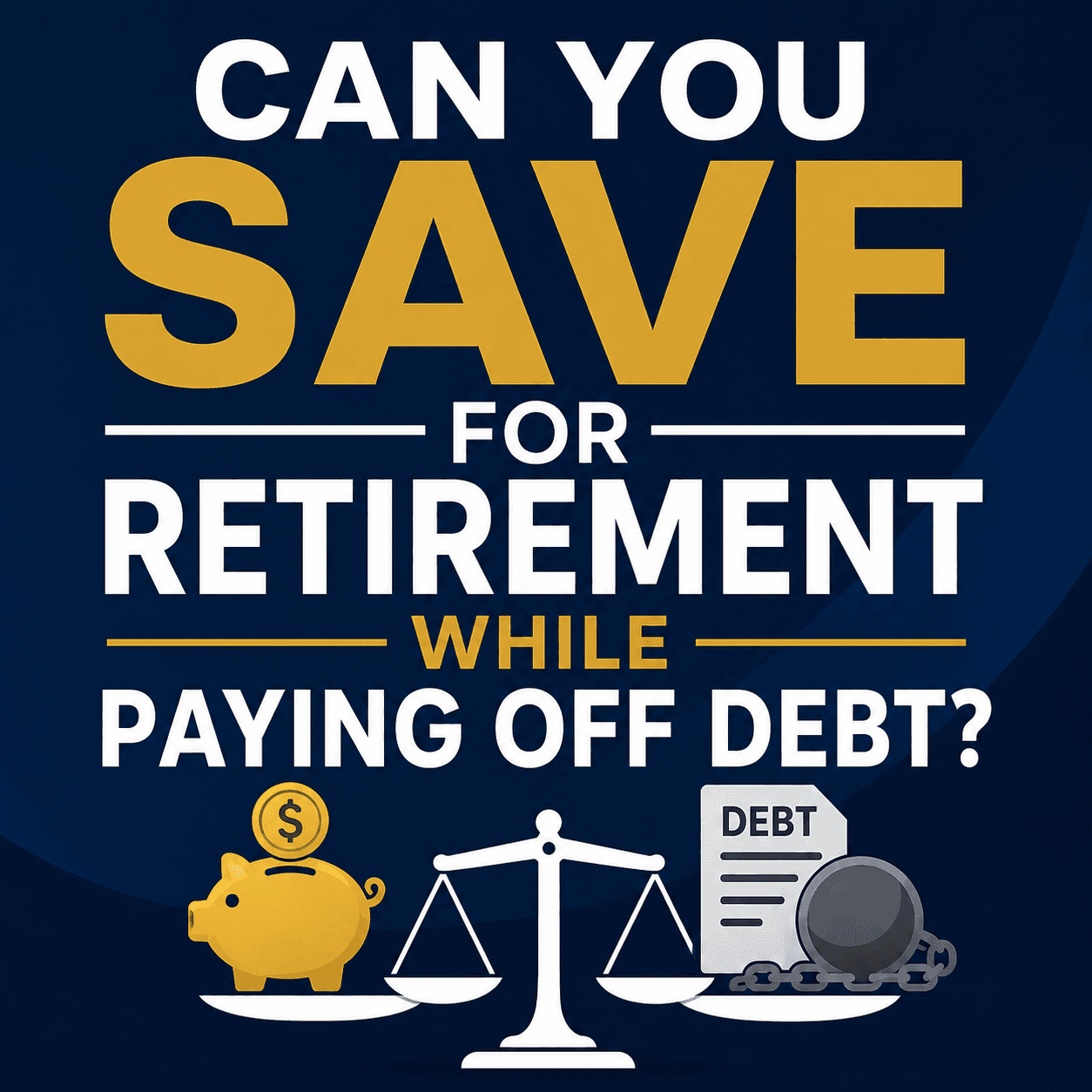
The short answer is yes - but the right strategy depends on the type of debt you have, the interest you're paying, your financial goals, and your retirement timeline.
Many Americans believe they need to eliminate every dollar of debt before they begin saving for retirement. While that may sound like the safest approach, waiting too long to invest can cost far more than many people realize.
If you're a business owner, self-employed professional, freelancer, or real estate investor, balancing debt payments with retirement contributions is one of the most important financial decisions you'll make. Every dollar you earn has multiple jobs to do - pay bills, reduce debt, grow your business, and prepare for retirement.
The good news is that paying off debt and saving for retirement don't have to be competing goals. In many cases, they can work together as part of a well-rounded financial strategy.
In this guide, we'll explain when it makes sense to prioritize debt, when retirement savings should come first, and how a Solo 401(k) may help eligible self-employed individuals build long-term wealth while managing debt responsibly.
Why This Question Is So Common
Debt has become a normal part of life for many Americans. Mortgages, student loans, auto loans, business financing, and credit cards are common financial tools, but not all debt is created equal.
At the same time, retirement often feels like something that can wait until "later."
Many people tell themselves:
"I'll start investing once my credit cards are paid off."
"I'll worry about retirement after I finish paying my student loans."
"Once my business grows, then I'll start saving."
Unfortunately, later often becomes years later.
One of the biggest advantages retirement investing has is time. The earlier money begins working for you, the more opportunity it has to grow through compounding.
Waiting too long can make reaching your retirement goals significantly more difficult.
Understanding Good Debt vs. Bad Debt
Before deciding where your money should go, it's important to understand the difference between productive debt and expensive debt.
Generally speaking, good debt is debt used to purchase assets or create opportunities that may increase in value or generate income. Examples can include a mortgage on a primary residence, financing for a profitable business, or an investment property that produces positive cash flow.
Bad debt, on the other hand, is typically debt used to purchase depreciating assets or consumer goods that do not produce income. High-interest credit card balances are one of the most common examples.
This distinction matters because the cost of carrying debt - and the potential return from investing - can vary significantly.
For example, carrying a credit card balance with a high interest rate may have a much greater impact on your finances than making scheduled payments on a lower-interest mortgage.
Every situation is unique, which is why there is rarely a one-size-fits-all answer.
The Cost of Waiting to Invest
Many people underestimate how valuable time can be when saving for retirement.
Imagine two investors.
Investor A begins investing at age 25 and contributes consistently for many years.
Investor B waits until age 35 because they wanted to eliminate every dollar of debt before investing.
Even if Investor B eventually contributes more money each year, Investor A may still accumulate significantly more retirement savings simply because their money had an additional decade to grow.
Compounding allows investment earnings to potentially generate additional earnings over time.
While investment returns are never guaranteed and markets fluctuate, beginning earlier can have a meaningful impact on long-term retirement outcomes.
This is why many financial professionals encourage individuals to avoid unnecessarily delaying retirement savings whenever possible.
When Paying Off Debt Should Come First
Although retirement investing is important, there are situations where aggressively reducing debt should be a top priority.
High-interest consumer debt - especially credit cards - can quickly become difficult to manage if balances continue growing faster than they are being paid down.
For example, carrying several high-interest credit cards while making only minimum payments can create a cycle that becomes increasingly expensive over time.
Similarly, if you are struggling to make required monthly payments, missing payments, or relying on new debt simply to cover living expenses, improving cash flow and reducing financial stress may need to come before increasing retirement contributions.
Building a strong financial foundation is essential.
When Saving for Retirement Should Remain a Priority
On the other hand, not every type of debt should automatically prevent you from investing for retirement.
Many successful business owners, homeowners, and real estate investors carry manageable debt while continuing to invest for the future.
For example, someone with a fixed-rate mortgage and stable income may decide to continue making scheduled mortgage payments while also contributing to retirement.
Likewise, entrepreneurs often finance business equipment or expansion while continuing to build retirement savings.
The objective is not necessarily to eliminate every loan before investing. Instead, the goal is to manage debt responsibly while allowing long-term investments to begin working.
Finding the Right Balance
Rather than asking:
"Should I pay off debt or save for retirement?"
A better question is often:
"How can I do both?"
Many people successfully divide their available cash flow between debt reduction and retirement savings.
For example, someone may:
Pay more than the minimum on high-interest debt.
Continue making required payments on lower-interest loans.
Build an emergency fund.
Make consistent retirement contributions.
Increase retirement savings as debt balances decline.
This balanced approach allows progress toward multiple financial goals instead of focusing exclusively on one.
How a Solo 401(k) Can Help Self-Employed Individuals
For eligible self-employed individuals and business owners, a Solo 401(k) can become one of the most powerful retirement planning tools available.
Unlike many traditional retirement accounts, a Solo 401(k) offers higher contribution opportunities for many entrepreneurs because eligible individuals may contribute both as the employee and employer, subject to IRS limits and compensation requirements.
The plan may also offer features such as:
Traditional (pre-tax) contributions
Roth contributions, if permitted by the plan
Eligible rollovers from certain retirement accounts
Participant loans, if permitted by the plan
Alternative investments such as real estate, private lending, and certain private businesses through a properly structured self-directed Solo 401(k)
These features can provide flexibility while allowing retirement savings to continue growing alongside other financial goals.
Don't Let Retirement Become an Afterthought
Business owners are especially vulnerable to postponing retirement planning.
Many entrepreneurs reinvest every available dollar back into their business, assuming they will simply save more later.
While investing in your business can absolutely be worthwhile, retirement planning should not be forgotten.
This article is general education, not legal, tax, investment or accounting advice. Survival 401K is not a bank, custodian, registered investment adviser, law firm, CPA firm, lender or fiduciary, and does not recommend specific investments. Rules and figures change - confirm anything time-sensitive with your own adviser and with official IRS guidance.